
|
||||||||||||||||||||||
|
Thrombosis - General Information
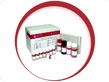
Thrombosis caused by blood coagulation in vessels and the heart cavity is one of the most widespread causes of death in developed countries. Formation of a thrombus in the vein lumen lead to disturbance of blood circulation in affected extremities. Approximately 95% of all venous thromboses occur in the lower extremities. The most dangerous complication of deep vein thrombosis is pulmonary embolism, often the first and only manifestation of venous thrombosis and ranking third among causes of sudden death. The most understood markers of hereditary thrombosis are polymorphisms of several genes:• F5 gene encoding factor V, a protein cofactor involved in transforming prothrombin to thrombin. Polymorphism +1691G/A (Leiden mutation) occurs with a frequency of 5% in Europeans.• F2 gene encoding prothrombin, one of the main components of the blood coagulation system. Polymorphism +20210G/A intensifies the expression of F2 gene leading to a significant increase in the prothrombin concentration in blood (1.5–2 times). The frequency of the F2 +20210G>A genotype reaches 1- 4% in European populations. A genetic predisposition to thrombosis combined with moderate influence of adverse environmental factors can trigger severe complications up to pulmonary embolism. Detecting high risk groups allows prevention of disease development in the presymptomatic period. Indications for use of Thrombosis- F5, F2 kit :• Members of families with expressed hereditary thrombophilia.• Following first occurrence of venous embolism in patients under 50 years. • Patients with venous embolism after 50 years without apparent reasons. • Patients with venous embolism during pregnancy, postnatal period, during use of contraceptives or hormone replacement therapy. • Women with unexplained prenatal abnormalities of foetus in second and third trimesters of pregnancy. • Patients with a first occurrence of venous embolism in atypical locations. |
|||||||||||||||||||||